
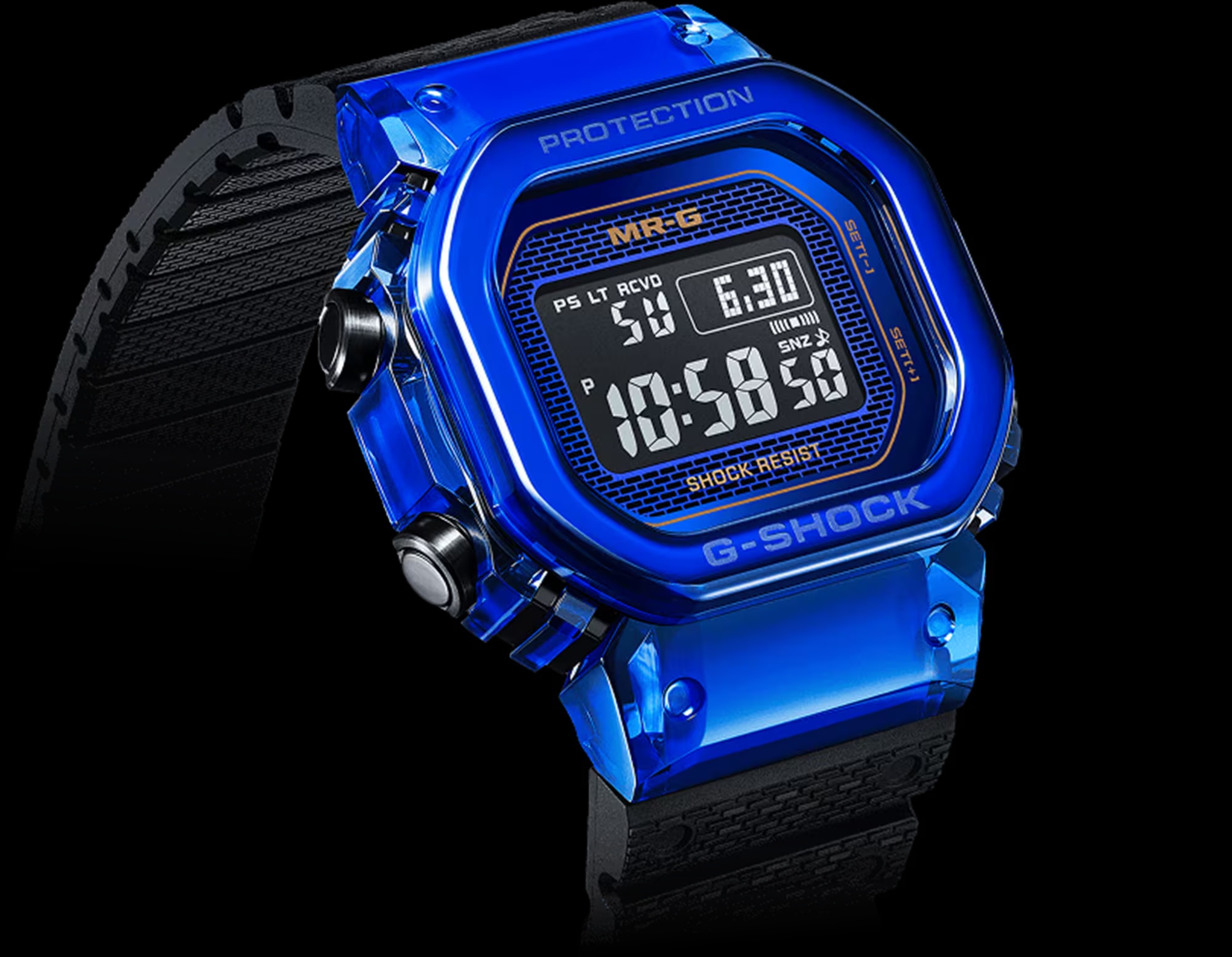
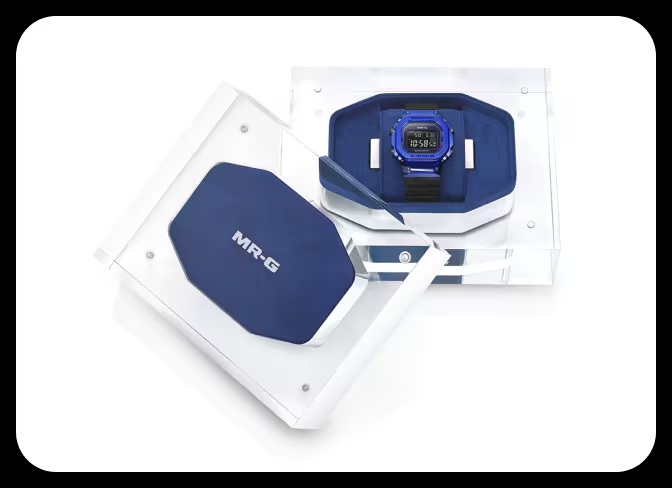
Casio announced the G-SHOCK MRG-D5000 on 1 October 2026, taking the familiar square MR-G into territory the brand had been working towards for years: blue sapphire crystal as a structural part of the exterior. Production is limited to 20 watches worldwide, with the US retail price of USD 80,000, scheduled to begin on 1 December.
A case designed around sapphire’s weak point
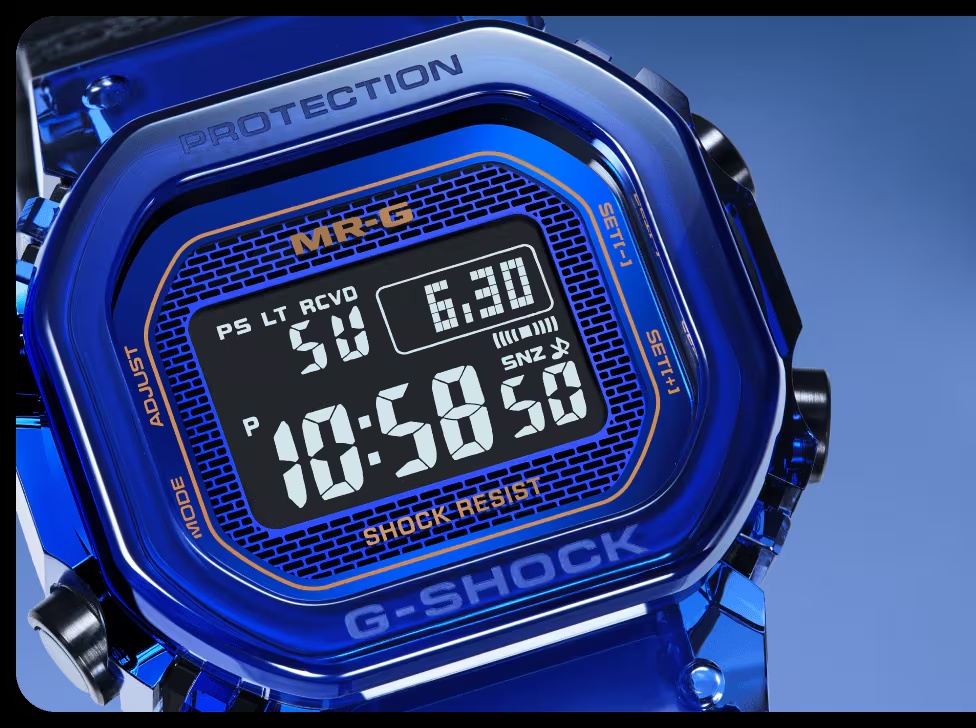
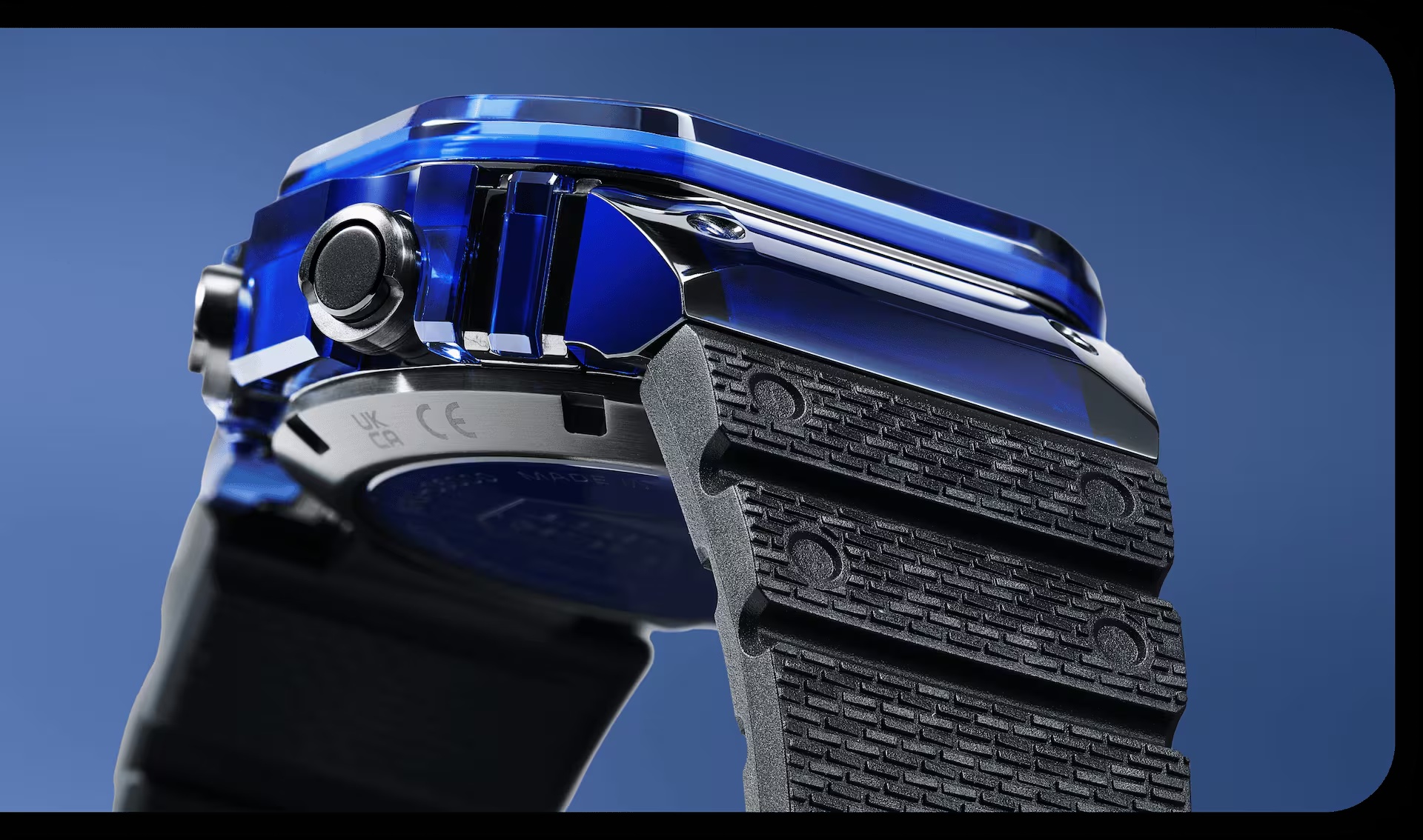
Scratch resistance was never the difficult part. Casio says the engineering problem was impact: screw holes in sapphire can become stress points where cracking starts, which is an awkward weakness for a watch carrying the G-SHOCK name. The answer is a new version of the MR-G Multi-Guard Structure, splitting the bezel and case into multiple components and assembling the sapphire parts without screws passing through them.
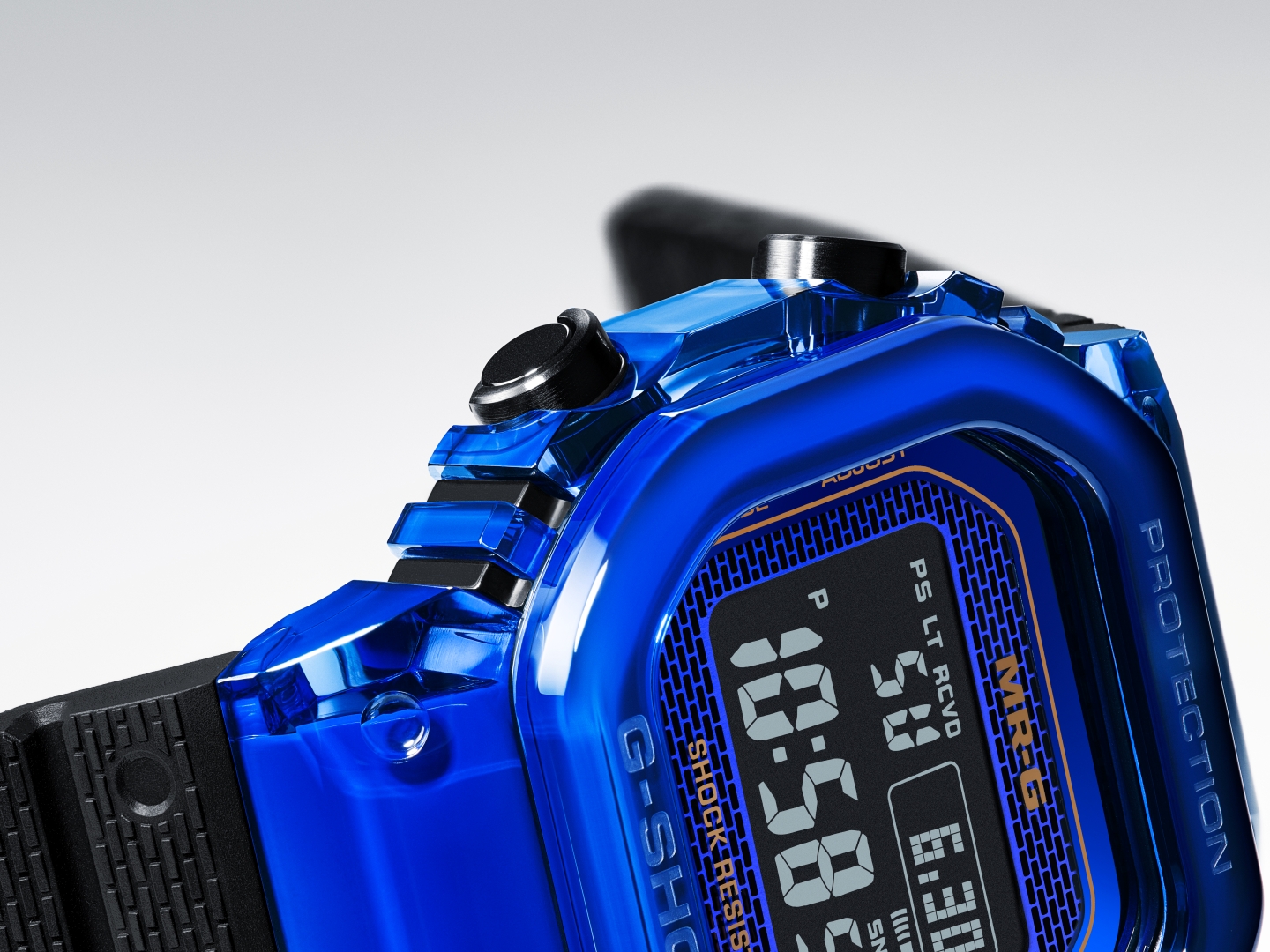
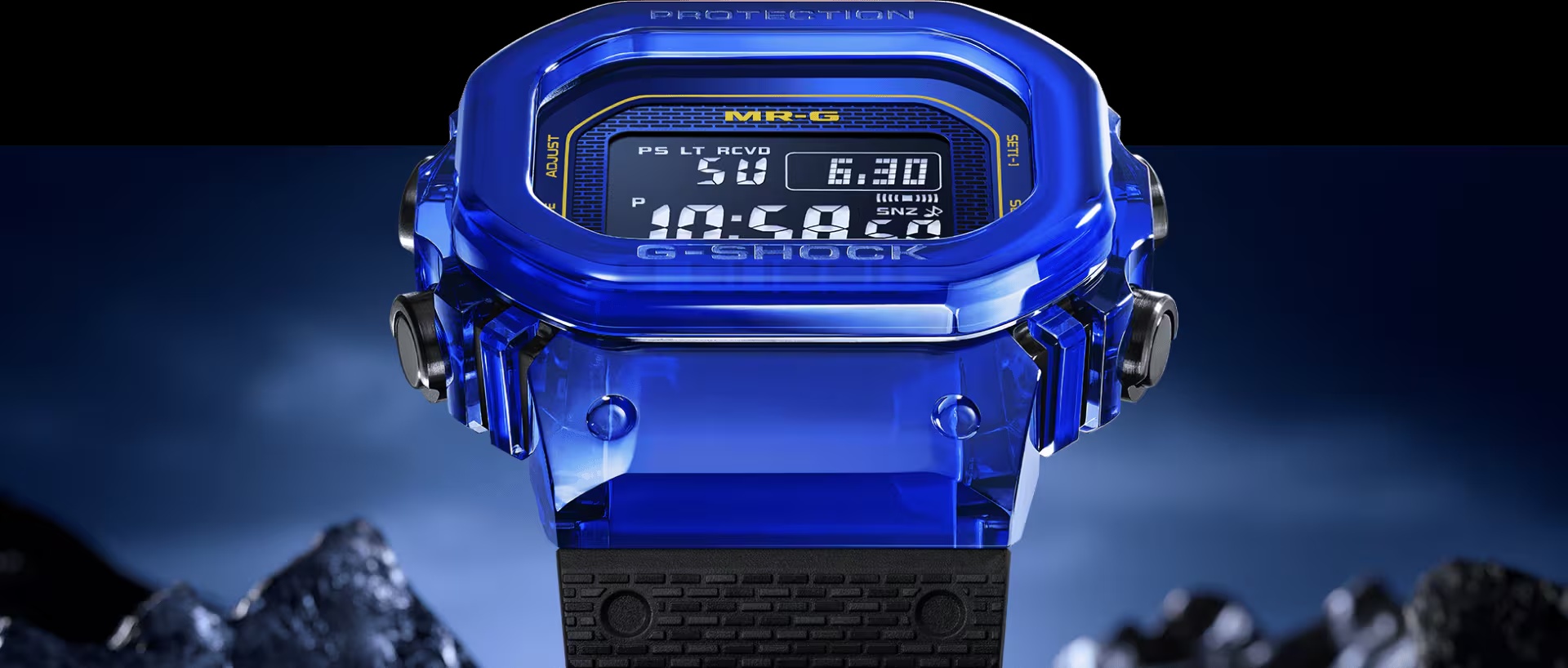
The bezel itself is made entirely from blue sapphire crystal. Titanium remains part of the case construction, while the screw-lock caseback combines grade 5 titanium with a blue sapphire insert. Each watch is individually numbered from 1/20 to 20/20.
Eight years from concept to production
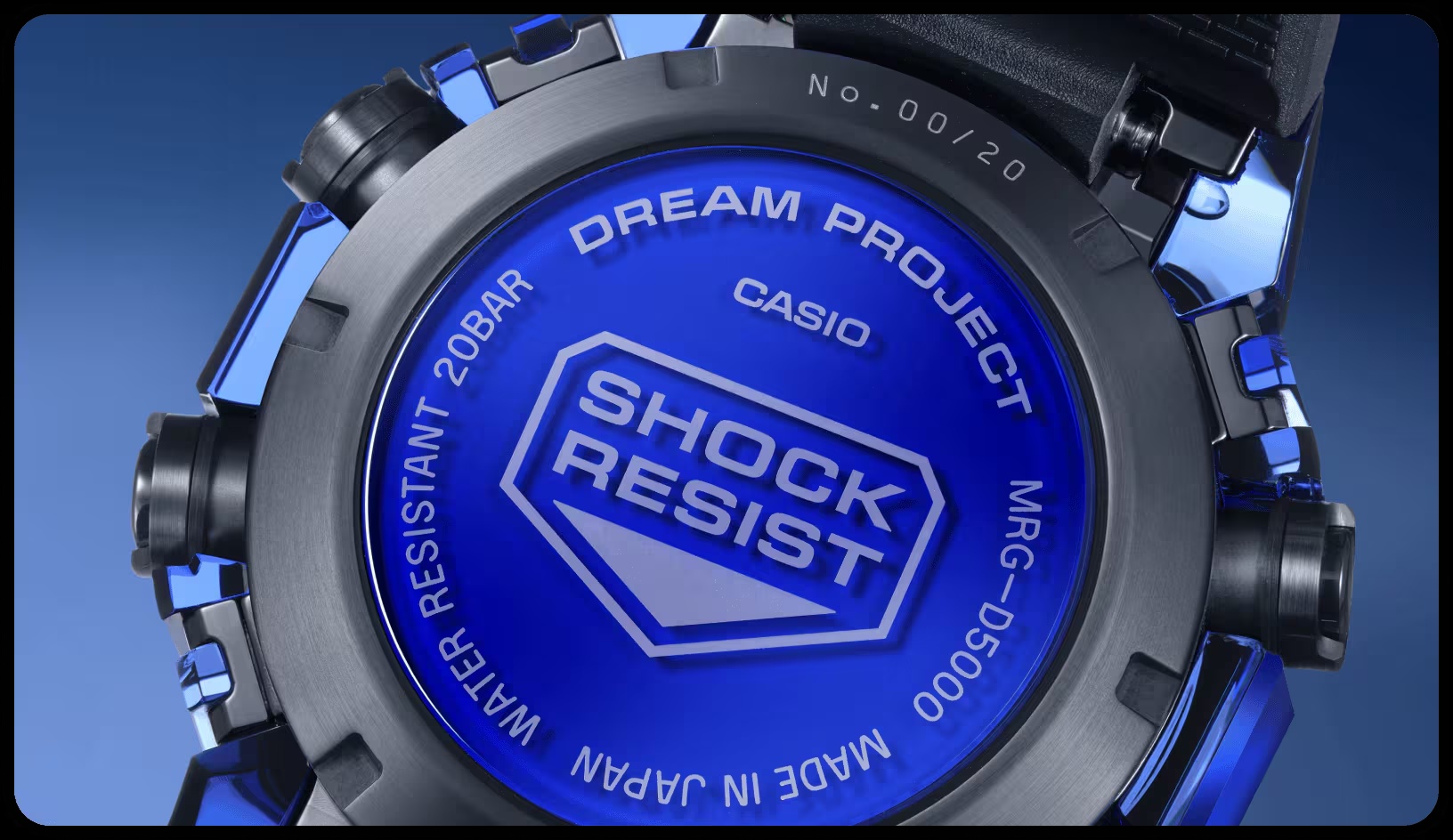
Casio traces the project back to 2018. Its Dream Project produced a solid-gold square G-SHOCK that year, while a sapphire concept was shown in Basel at the same time. The material could deliver the appearance Casio wanted, but the company had not yet solved the shock-resistance problem well enough for production.
A major step arrived in 2022 with the titanium MRG-B5000, whose multi-part case and bezel architecture allowed individual components to be protected and replaced. The later Blue Rose Project kept developing that idea around sapphire until Casio was prepared to put it into a production G-SHOCK.
Twenty pieces and a very expensive square G-SHOCK
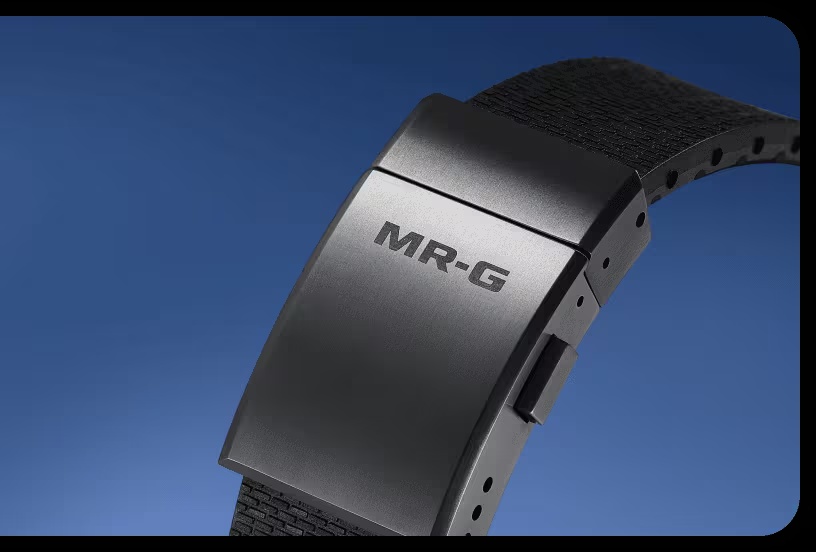
The display keeps the brick pattern associated with the original digital G-SHOCK, here produced in stainless steel with blue vapour deposition. Casio uses pure 24-karat gold for the MR-G and SHOCK RESIST lettering, while the blue sapphire caseback and polished titanium parts push the watch well beyond the material mix of a normal square G-SHOCK.
The strap is Casio’s Dura Soft rubber design with a three-fold clasp. The watch measures 51.1 × 43.2 × 16.5mm and weighs 121g, so the price is clearly driven by construction, materials and the tiny production run rather than miniaturisation.
The digital toolkit underneath
Behind the unusual exterior is a recognisable high-end G-SHOCK feature set. Water resistance is rated to 200m, time adjustment is available through Multi Band 6 radio reception, and power comes from Casio’s Tough Solar system. World time covers 38 time zones, with a 1/100-second stopwatch, 24-hour countdown timer, five daily alarms, full auto-calendar and LED backlight also included.
Casio’s Japanese specification lists average accuracy at ±15 seconds per month when the watch is not receiving a radio time signal. The Japanese release also says only one of the 20 watches is allocated to the domestic market.
The MRG-D5000 is therefore best read as a demonstration of what Casio can make its square MR-G architecture do when production volume stops being the main constraint. The useful question comes after these 20 pieces: whether the screwless sapphire construction remains a one-off exercise or becomes a route into future MR-G models.
Specifications – Casio G-SHOCK MRG-D5000
Case: Titanium and blue sapphire crystal; 51.1 × 43.2 × 16.5mm; 121g
Crystal: Sapphire with anti-reflective coating on the inside
Caseback: Screw-lock grade 5 titanium with blue sapphire insert; individually numbered 1/20–20/20
Water resistance: 200m
Time adjustment: Multi Band 6 radio control
Power: Tough Solar
Functions: World time (38 zones), 1/100-second stopwatch, 24-hour countdown timer, five daily alarms, full auto-calendar, LED backlight
Strap: Dura Soft rubber with one-touch three-fold clasp
Limited edition: 20 pieces worldwide
Price: JPY 11,000,000 including Japanese consumption tax
Availability: From 1 December 2026